
Riding a scooter is arguably the best way to experience Vietnam—especially in scenic hubs like Da Nang and Hoi An, where coastal roads and short day trips are practically made for two wheels. However, in 2026, it is also one of the fastest ways to ruin a holiday if you are riding without a license that Vietnam actually recognizes.

As a foreigner, you will likely hear a lot of casual, outdated advice: “Police don’t care,” “Just pay a small fine,” or “Everyone rides without a license.” While that might have sounded true years ago, today it is incomplete at best—and dangerously wrong at worst.
This article explains what really happens if you ride a motorbike in Vietnam without a valid license: the likely fines (in ranges), how impoundment works, who is legally responsible (you vs. the rental shop), and the crucial difference between legal theory and real-world practice. I am writing this with “street-smart” reality in mind, not just generic textbook rules.
Quick Tip: If you want the simple, legal path that avoids most of these problems, jump to the safe option: a legal sub‑50cc bike. Our most popular solution for tourists is a 50cc scooter rental in Da Nang (petrol or 50cc‑equivalent electric), designed specifically for travelers who don’t have the right paperwork.
1. First: What “No License” Actually Means in Vietnam (for Foreigners)
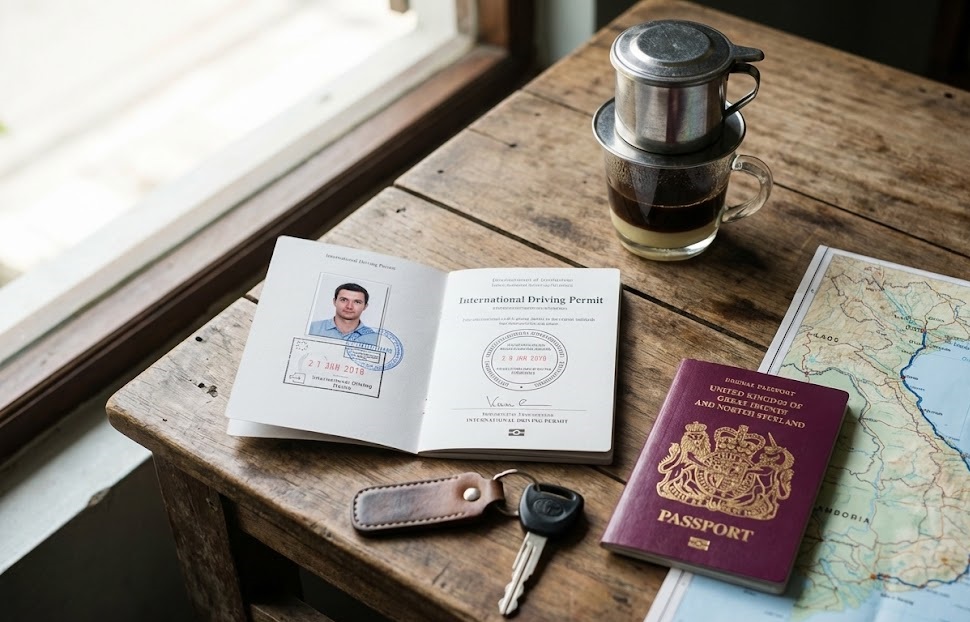
When travelers say “I don’t have a license,” they usually mean one of three specific scenarios. Understanding which one you fall into is the first step to assessing your risk.
Scenario A: You have no motorbike license at home
Legally, you should not ride anything above the “no-license” category (50cc or under) in Vietnam. If you are on a 110cc-155cc scooter, you are driving illegally.
Scenario B: You have a motorbike license at home, but your IDP is the wrong type
Vietnam’s rules are strict. To ride a bike over 50cc legally, you typically need two documents:
- Your original home-country motorbike license.
- An International Driving Permit (IDP) issued under the 1968 Vienna Convention.
Crucial Note: Many Western tourists arrive with an IDP issued under the 1949 Geneva Convention (common for citizens of the USA, UK, Australia, and NZ). In Vietnam, the 1949 IDP is not technically valid. This means you are treated exactly like an unlicensed rider on larger scooters—even if you are a competent rider back home.
Scenario C: You “rent anyway” because the shop said it’s fine
This is where the risk spikes. Some rental shops will happily rent you 110–155cc bikes while reassuring you that “no license is needed.” Remember: The law doesn’t disappear just because someone smiled and handed you the keys.
2. Official Consequences: Fines, Paperwork, and Escalation
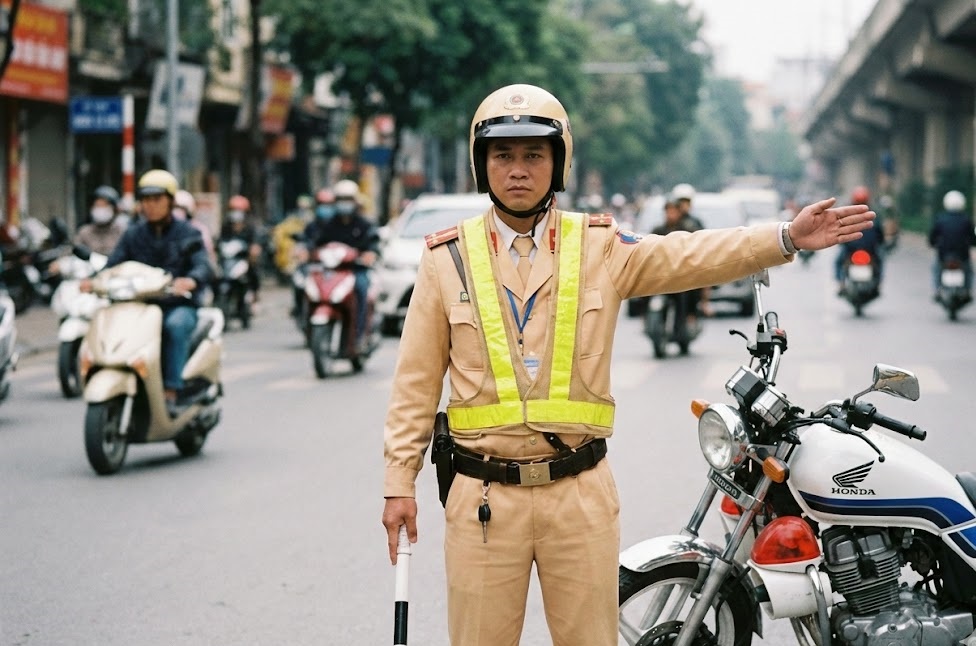
Let’s keep this realistic: the exact fine amounts can fluctuate, and enforcement differs by city, officer, and circumstance. Instead of claiming exact numbers, here is what you should expect regarding Vietnam motorbike fines and categories.
2.1 Unlicensed riding: The fine is not “nothing”
If you are caught riding a bike that requires a license (generally over 50cc) and you cannot produce a valid license/IDP for Vietnam, the outcome often includes:
- An official administrative fine: In practice, this is commonly a few million VND. It can go higher depending on the situation (repeat checks, attitude, location, or if combined with other violations like missing a helmet).
- Potential vehicle impoundment: This is the consequence tourists underestimate most (detailed in Section 3).
- Extra penalties for missing documents: Police may also ask for the bike’s registration card (“blue card”) and your rental agreement. Missing these can increase the hassle and the penalties.
2.2 When are police checks likely?
You might ride for days and never be stopped. Then, reality hits when:
- You cross a major bridge or main road during a designated checkpoint.
- You ride in an area with heavy tourist traffic where enforcement is stricter.
- You are involved in any accident (even a minor scrape).
- You are riding “like a tourist” (no helmet, wrong side of the road, unpredictable turns).
The worst time to discover you are technically unlicensed is after something goes wrong.
3. Bike Impoundment: The Real Nightmare
Impoundment is where the “I’ll just pay a small fine” fantasy falls apart. This is a significant logistical disruption to your trip.
What impoundment usually looks like
If police decide to impound the bike due to a lack of license, here is the real-world process:
- Seizure: They hold the vehicle at a police lot or designated storage area.
- Paperwork: You receive Vietnamese-language forms referencing the violation.
- Retrieval: To get the bike back, someone (usually the owner/shop) must provide proof of ownership, pay the fine(s), and handle administrative procedures.
How long is the bike held?
In many cases, impoundment lasts for 7 to 10 days, sometimes longer around weekends or holidays. For tourists, this creates two immediate problems:
- You lose your mode of transport and your travel plans are stalled.
- You are now dependent on the rental shop’s willingness to help.
Who pays for impoundment?
This is where it gets uncomfortable. In most standard rental agreements:
- You are responsible for violations that occur while the scooter is in your possession.
- If the bike is impounded, the shop may require you to pay the fine, keep your deposit until the bike is recovered, and charge you for “downtime” (lost rental days).
4. Who Is Legally Responsible: The Rider vs. The Rental Shop
The Rider (You)
In Vietnamese administrative enforcement, the person operating the vehicle is typically the one penalized for:
- No valid license.
- Helmet violations.
- Traffic violations (red lights, speeding).
Even if a shop “allowed” you to rent, police will deal with the rider first.
The Rental Shop
If the bike has improper registration, the shop may be questioned. However, do not rely on this to protect you. Shops sometimes promise they’ll “handle it,” but:
- They are not the ones standing at the checkpoint.
- They are not the ones facing legal exposure after an accident.
- They are not the ones whose insurance claim gets denied.
A trustworthy, foreigner-focused provider will not encourage illegal riding. We openly explain legal options and recommend sub‑50cc solutions when appropriate—exactly as laid out in our guide to riding legally in Da Nang.
5. The Moment Everything Changes: Accidents & Insurance
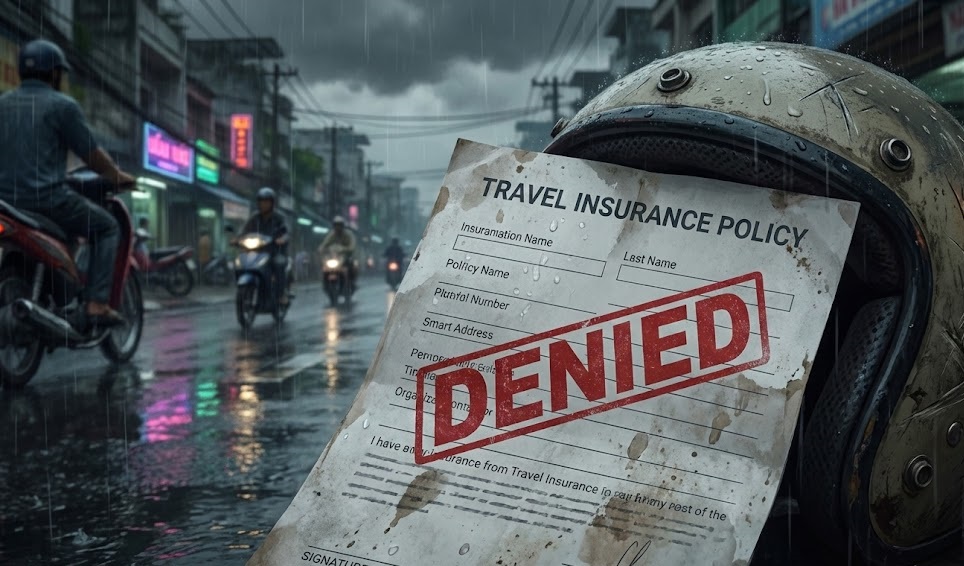
You can “get away with it” until you can’t. An accident is the #1 scenario where riding unlicensed becomes a serious financial and legal risk.
Minor vs. Major Accidents
- Minor accident: Even a small crash changes the dynamic. Police may be called, documents get checked rigorously, and the other party may push harder for compensation if they realize you are unlicensed.
- Serious accident: Consequences can be life-changing. You may face civil liability for medical bills and damages, criminal consequences, and be unable to leave Vietnam until matters are resolved.
Travel Insurance: The “Silent Killer”
This is the most critical section of this guide.
WARNING: Your Travel Insurance Likely Won’t Pay
Most travel insurers have a clause requiring you to hold a license valid for the vehicle in the country you are riding in.
If you crash on a 125cc scooter without the right license/IDP recognized by Vietnam, insurers often have a clean path to deny your claim.
- Hospital costs? On you.
- Third-party damages? On you.
- Medical evacuation? On you.
This is not rare; it is one of the most common “worst surprises” we see travelers face.
By choosing a legal class of bike—sub‑50cc petrol or 50cc‑equivalent electric—you reduce one of the biggest reasons claims get denied.
6. Comparison: Legal Theory vs. Real-World Practice
To help you decide, here is a quick comparison of what the law says versus what often happens on the street.
| Feature | Legal Theory (The Law) | Real-World Practice (The Street) |
| Requirement (Over 50cc) | Valid Home License + IDP (1968 Vienna Convention). | Many ride without it, banking on luck. |
| Police Checks | Can happen anytime; mandatory at checkpoints. | Inconsistent. Checkpoints vary by location/time. |
| Penalties | Fine (Millions VND) + Bike Impoundment. | Varies from “on-the-spot” settlement to full impoundment. |
| Risk Level | High (Legal & Insurance). | Asymmetric: Low risk of getting caught, massive risk if you do. |
The Takeaway: The risk is asymmetric. You might save a little inconvenience by riding a bigger bike illegally, but the downside—impoundment, denied insurance, trip disruption—is massive.
7. The Low-Risk, Legal Alternative: Ride Sub‑50cc
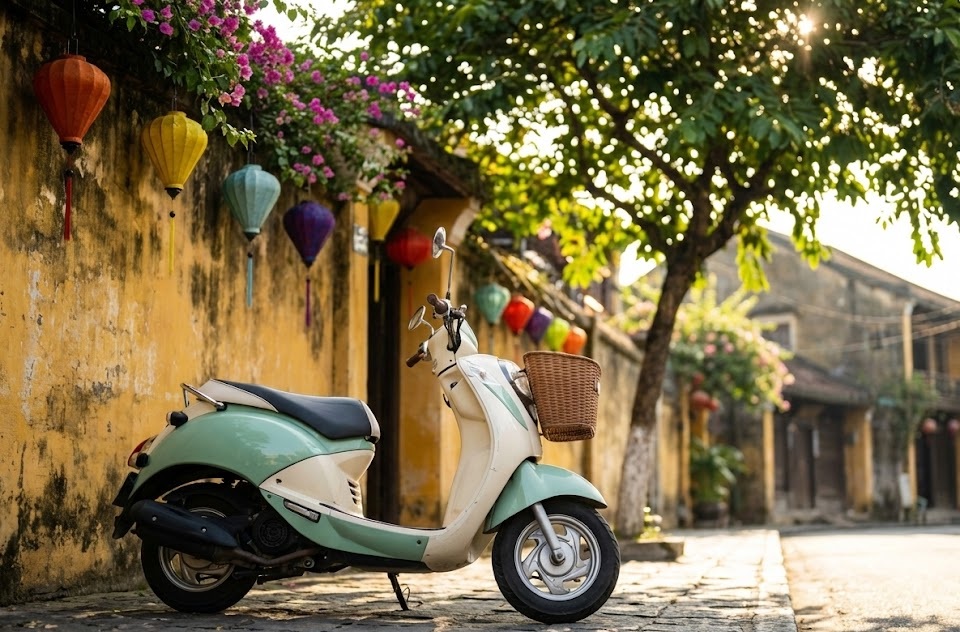
If you don’t have the right IDP or you don’t ride motorbikes at home, the smartest move is not to “hope for the best.” It is to choose the category that Vietnam explicitly allows without a license.
What counts as “No License Required”?
Based on Vietnam’s traffic laws:
- 50cc Petrol Scooters: (e.g., Honda Cub, Sym Elite).
- Electric Scooters: Vehicles with similar power classification (50cc-equivalent).
Why this works for Da Nang
Da Nang is one of Vietnam’s most scooter-friendly cities, featuring wide coastal roads, easier traffic than Hanoi/HCMC, and great short-distance attractions.
If you want a no-stress option that is legally safer for tourists, visit our 50cc scooter rental in Da Nang page. We offer both petrol models (classic feel) and electric scooters (quiet, eco-friendly) designed for stress-free exploring.
8. Practical Advice If You Are Stopped
I won’t give “loopholes,” but if you are already in a bad spot, here is professional guidance:
- Stay Calm & Polite: Aggression never helps.
- Show Your Docs: Present your Passport (or copy), Rental Contract, and Blue Card (Registration) if provided.
- Call Your Rental Shop: A reputable provider should support you immediately.
- Compliance: If forced to leave the bike (impoundment), prioritize your safety and follow instructions.
Most importantly: Avoid this situation entirely by renting the correct bike category.
9. Checklist: What a Trustworthy Rental Company Should Do
Before you rent, check if your provider meets these standards:
- [ ] Explains licensing clearly: They don’t lie about the law.
- [ ] Offers legal options: They have 50cc bikes available.
- [ ] Provides documents: You get a contract and registration copy.
- [ ] Quality gear: Helmets are clean and high-quality.
- [ ] Red Flag Warning: Avoid shops that say “Police never check” or “We’ll pay the fine.”
10. Bottom Line: Freedom Without the Fear
Riding in Vietnam should feel like freedom—sunset coastal roads, spontaneous coffee stops, and discovering places taxis never reach. But riding without a valid license on a bike that requires one is a gamble.
- Fines are real.
- Impoundment steals your time.
- Insurance denial can bankrupt your trip.
If you want to stay on the right side of the law without sacrificing independence, start by understanding the rules. And if you lack the correct IDP, the solution is simple: Choose a 50cc bike.
Need help choosing the right scooter? Send us a WhatsApp message, and we’ll recommend the safest, legal scooter rental in Da Nang for your specific itinerary.